
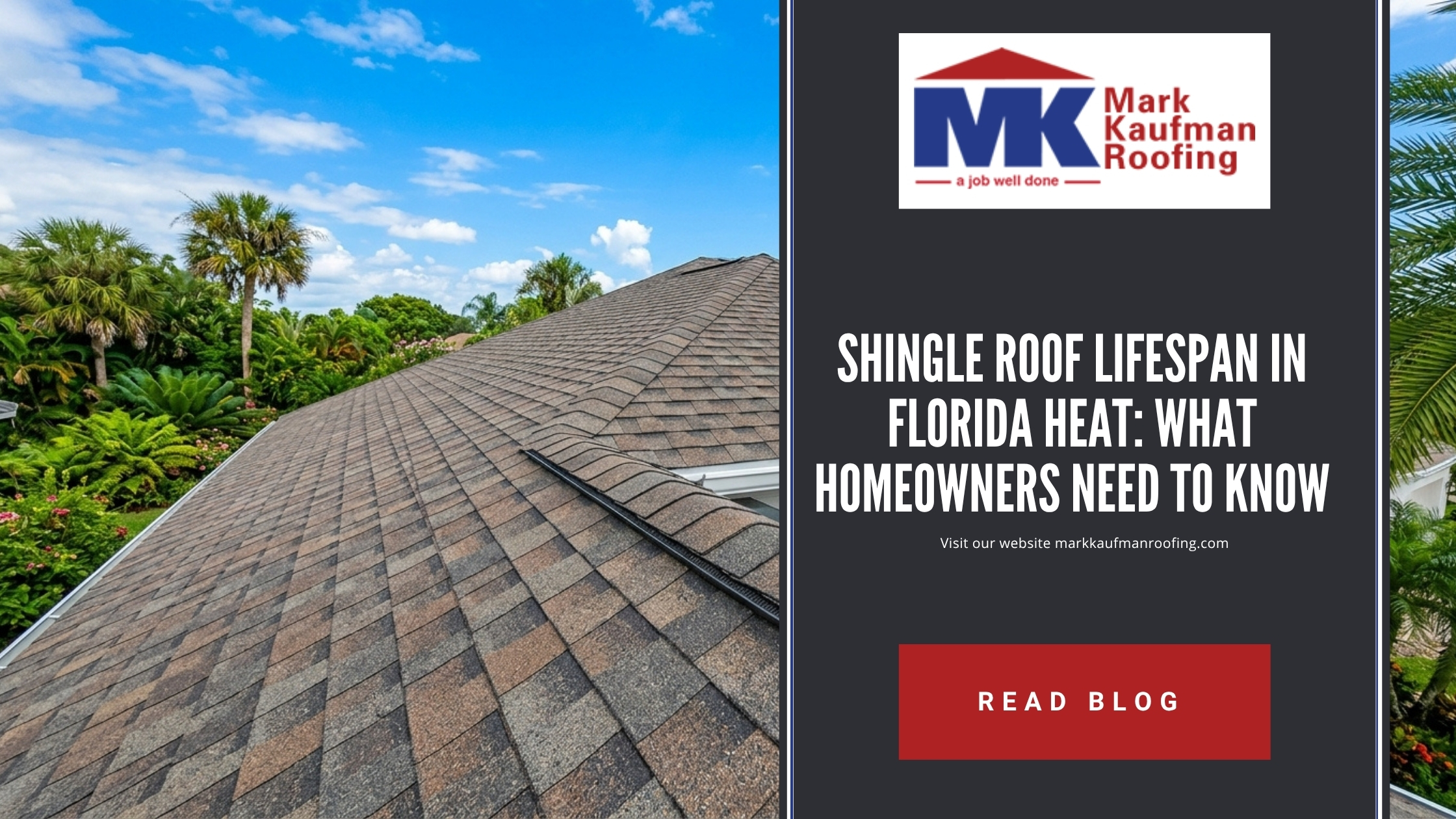
The Number on the Package Is Not a Florida Guarantee
You bought a house with a shingle roof that the seller said was only eight years old. The shingles are rated for 30 years. Simple math says you’ve got 22 years left. Right?
Not in Southwest Florida.
I’ve had this conversation with homeowners dozens of times. A 30-year architectural shingle in Ohio or North Carolina might genuinely approach that rated lifespan. In the Sarasota, Port Charlotte, and North Port market, the combination of UV intensity, heat, humidity, and hurricane season creates conditions that routinely cut that number by a third or more.
Understanding what actually drives shingle roof lifespan in Florida heat is the difference between planning a replacement on your terms and getting forced into one by an insurance company or a sudden leak during rainy season.
What Florida’s Climate Does to Asphalt Shingles Specifically
Asphalt shingles are made of a fiberglass mat, asphalt coating, and ceramic granules embedded on the surface. The granules do a specific job: they protect the asphalt underneath from UV degradation. When they start washing off, which Florida’s intense sun and heavy rain accelerates, the clock on your roof’s lifespan speeds up significantly.
Heat is the bigger problem that most homeowners underestimate. Shingles on a Florida roof can reach surface temperatures of 150 to 170 degrees Fahrenheit on a clear summer day. That thermal stress causes the asphalt to dry out, become brittle, and crack at a rate that simply doesn’t happen in cooler climates. The shingles expand and contract with every temperature swing, and over years, that movement loosens the sealant strips that hold the tabs together.
According to the Florida Department of Business and Professional Regulation, Florida’s roofing code requirements reflect this climate reality, with specific standards for wind resistance and material performance that are among the strictest in the country. Those standards exist precisely because of what Florida does to roofing materials over time.
Humidity is the third factor. Florida’s moisture-laden air doesn’t just feel uncomfortable. It creates conditions where algae and mold can take hold on a shingle surface, which darkens the roof, absorbs more heat, and accelerates granule loss. That dark streaking you see on roofs around the neighborhood isn’t just cosmetic. It’s a sign of biological degradation actively shortening the roof’s life.
Real-World Lifespan Expectations for Southwest Florida
Here’s what we actually see in the field across our service area. Three-tab shingles, which are thinner and lighter, typically last 12 to 15 years in this market before they need replacement. Some make it to 18. Many don’t.
Architectural shingles, also called dimensional or laminate shingles, perform better. A quality architectural shingle installed correctly can last 20 to 25 years in Florida’s climate when the underlying system is solid, ventilation is adequate, and the roof sees regular maintenance. The key phrase there is “installed correctly.”
Installation quality matters more in Florida than almost anywhere else. Improper nailing patterns, inadequate underlayment, and poor flashing at penetrations and valleys create failure points that Florida’s weather exploits within a few years. A perfectly good shingle product installed poorly in this climate won’t make it to the 15-year mark.
That’s why the GAF Master Elite Factory-Certified Contractor designation matters to us. It’s not a marketing badge. It’s a certification that requires documented installation standards, ongoing training, and the ability to offer GAF’s enhanced warranty products. Very few roofing contractors in the country hold the Master Elite designation. We’re one of them, and we’ve also earned the GAF Master Elite Presidents Club and Triple Excellence Award since 2019 for the highest level of customer service, warranties, employee training, and installation.
Signs Your Shingle Roof Is Past Its Prime
Not every roof announces its problems loudly. Some of the clearest warning signs are easy to miss if you’re not looking.
Granule loss in the gutters is one of the first indicators. After a heavy rain, run your fingers through the downspout discharge area. If you’re pulling out significant amounts of granules, your shingles are telling you something.
Curling or cupping at the shingle edges is a sign of heat stress and age. Shingles that lie flat and seal tightly to each other are doing their job. Shingles that have started to curl at the corners or cup in the middle are no longer sealing properly and become progressively more vulnerable to wind uplift.
Missing shingles after a storm are an obvious one, but the roof below often gets ignored. Missing shingles expose the underlayment and decking. If your roof is already aged, one missing shingle can become a leak path within a single rain event.
Visible daylight in the attic, soft spots when walking on the roof, and interior water stains are later-stage signs. At that point, you’re likely looking at not just shingle replacement but decking repair as well.
Our roof repair services can address many of these issues when they’re caught early. When the overall system has aged past the point of repair, our team will walk you through replacement options honestly, not just recommend the most expensive solution.
Planning Ahead Instead of Reacting
The homeowners who handle roof replacement best are the ones who start the conversation before they’re forced into it. If your shingle roof is approaching the 15-year mark, get an inspection scheduled. If you moved into a home and aren’t sure of the roof’s exact age or condition, find out.
Florida’s insurance market has made this even more important. Insurers are scrutinizing roof age and condition more aggressively than they were five years ago, and a roof that hasn’t been professionally inspected and documented can complicate both renewals and claims. Our inspections include a Citizens Insurance Approved Roof Inspection Report, which gives you documentation that carries real weight with insurers.
We also offer financing options for homeowners planning a full replacement, and our Roof Loan Calculator on the website gives you a quick starting point for understanding monthly payment ranges.
Mark Kaufman Roofing has been serving Southwest Florida homeowners since 1988. We know this market, we know these roofs, and we know what Florida heat does to them over time. Call our North Port office at (941) 426-5241, reach Sarasota at (941) 365-7222, or visit markkaufmanroofing.com to schedule your roof assessment.
Don’t let the number on the shingle package set your expectations. Let someone who has been on Florida roofs for decades give you the real answer.

